

April 30, 2026
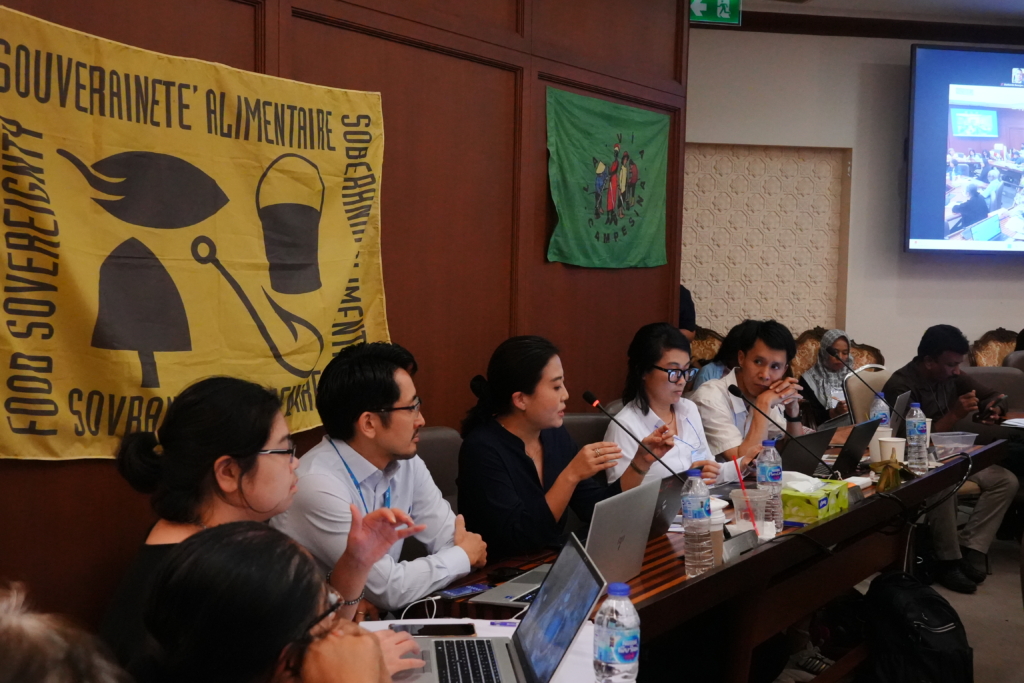
We are organisations of peasant family farmers, Indigenous Peoples, fisherfolk, pastoralists, women, youth, and gender-diverse peoples — organised through the IPC and the AHC — from 49 organisations across 17 countries. We gathered in Bangkok ahead of the 38th APRC to arrive here in Brunei Darussalam speaking with one voice.
Our communities are losing territories, livelihoods, ancestral knowledge, and dignity. Predatory debt strips us bare. Corporations peddle false solutions while extracting value from our lands and waters. The so-called blue economy makes new promises that sound worryingly like the old ones. Meanwhile, climate change is devastating our region with intensifying typhoons, droughts, flooding, and sea-level rise that disproportionately destroy the food systems and territories of those who have contributed least to the crisis. And through it all, the legal frameworks that should protect us — UNDROP, UNDRIP, the VGGT, the SSF Guidelines, and the UNDFF — remain chronically under-implemented by the very states that endorsed them.
Drawing on the Nyéléni Global Forum held in 2025, we name debt as a primary driver of hunger and poverty. Our governments’ capacity to respond is strangled by sovereign debt, and predatory microfinance is devastating communities. Many thousands of small-scale food producers have taken their own lives because they could not repay debts. We demand that FAO place debt on the UN agenda and support communities and governments to break free from it. With FAO’s technical and advocacy support, agrifood transformation can be financed through domestic resources without recourse to sovereign borrowing on international markets. Further, FAO and Member States must reform the Hand-in-Hand Initiative to incorporate mandatory social and environmental safeguards, and genuine participation of food producer organizations in investment design.
Agroecology is a peasant and fisherfolk ideology grounded in community power. It demands research and extension systems that place indigenous and community-generated knowledge on equal footing with formal science, challenging the colonial hierarchies that systematically marginalise women, Indigenous Peoples, and small-scale food producers.
The denial of territorial rights is a root cause of today’s polycrisis. From ICARRD+20, we demand states reject the commodification of nature and develop agrarian reform built on recognition, restitution, redistribution, and regulation.
Gender-transformative policies must secure women’s land rights, recognise unpaid labour, and ensure equitable access to finance and services – and the International Year of the Woman Farmer must deliver genuine structural change, beginning with formal recognition of women as farmers in national policy. At the same time, the CFS must be strengthened to monitor implementation of the Tenure Guidelines through community-led observatories that track real progress.
Addressing the parallel crisis of generational renewal, FAO and Member States must confront the structural drivers pushing young people off farms and out of fishing communities – landlessness, debt, and exclusion from decision-making – by treating youth as political actors, establishing binding participation mechanisms, and ensuring agrarian reform secures land and resource access for rural youth, especially young women, recognising that food systems transformation depends on the rights and agency of the next generation.
Digital biopiracy is accelerating as DSI allows corporations to appropriate farmers’ knowledge without consent or benefit-sharing, while AI systems trained on traditional knowledge and community seed databases extract and commercialise that knowledge without accountability. FAO and Member States must close these digital loopholes and establish binding data governance frameworks that protect community data sovereignty.
Between regional conferences, we demand for strengthened and more consistent engagement with FAO. Meaningful civil society participation is not a courtesy – it is a prerequisite for legitimate governance.
While we demand responsive action from our governments and from FAO, we, as civil society, also commit to deepening political education on the structural drivers of the food and climate crisis, and to building community-led alternatives that reclaim sovereignty, such as solidarity economies, community credit systems, cooperative production and distribution, and territorially rooted food systems grounded in justice, care, and reciprocity.
The time for incremental change has passed. What is needed now is structural and systemic transformation – led by the people who feed the world.